
A Patriot Author’s Recommendations to Sort Canada Out (Post Carney Davos Speech)
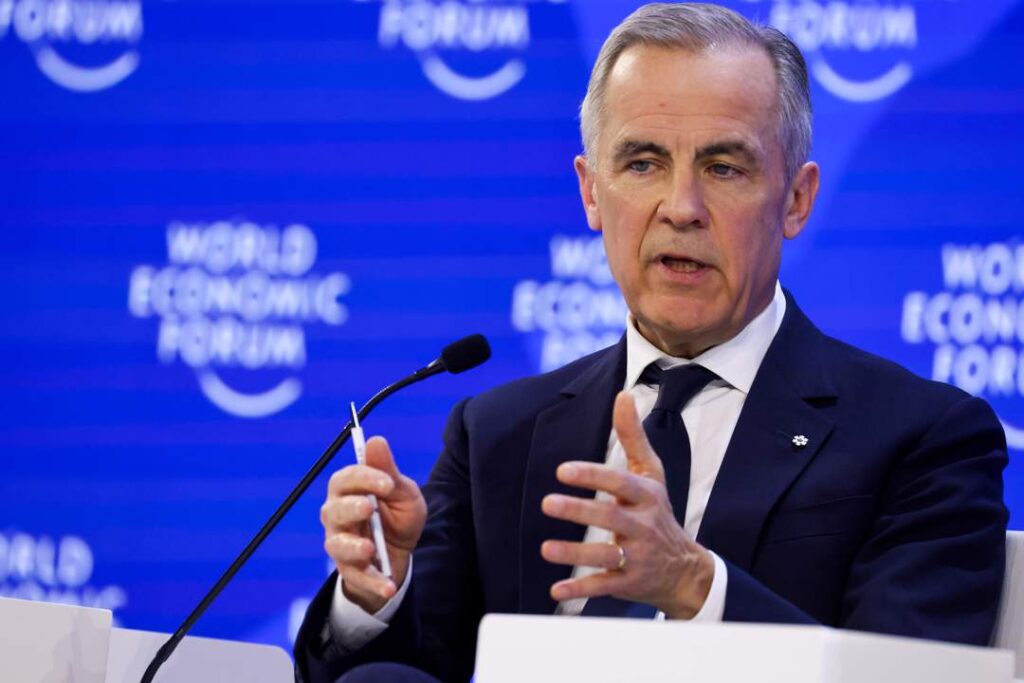
Further to Mr. Carney’s January 20 speech in Davos, I re-read this piece I wrote several weeks ago.
I’m struck by the similarities between what Carney said and what’s below.
That Carney’s speech so closely reflects what is below goes to show how much he nailed the moment yesterday in Davos. If I’m a centre-right Canadian, and the PM and I are singing from the same hymn book, IMHO, Carney is in a political sweet spot.
Following his trip and announcements in China and his Davos speech, I’ve read and seen dozens of right-wing folks tear Carney to shreds, but you have to ask – what is the alternative?
Is it to lean into the United States? Because, clearly, that’s not working. The whole of Canada could bend over backward for the current US admin, and it still wouldn’t be enough. I think it’s abundantly clear that the US won’t be satisfied with anything less than subjugation.
Well, from where I sit, in my part of Canada, it’s not on.
Whether you’re American, Canadian, or otherwise, I think Carney’s speech in Davos was politically significant. He said the right things and struck the right tone.
Of course, with all speeches, the test will be in the coming days and weeks, should the United States continue its course on Greenland.
A quick word to any American readers scanning this. I appreciate that the Greenland move is polling poorly with the US public. Something like 20% or fewer of Americans think it’s good policy. This is all well and good, but from the outside looking in, I can’t help but see an implicit consensus in favour of the Greenland move in the absence of important figures speaking out against it.
Republican leaders, business leaders, former presidents, and other important people across American society don’t have much to say about the United States taking over a close ally’s territory, for what are clearly specious grounds.
At least the market is speaking. As Mr. Trump has ramped up his rhetoric on Greenland, the stock market and the US dollar have dropped. You can always count on the market and the economy to say what politicians won’t. Taking Greenland by force is a terrible, terrible idea. Just ask the S&P 500.
In any event, here’s a reposting of my essay about how Canada (and other countries) should engage and respond to the current version of the greatest country to have ever ruled over a piece of land on this planet.
Originally posted early December 2025
Like almost everyone, I have thoughts on what’s transpired in the past week vis a vis the Trump administration.
I know there’s lots of content out there claiming bitterness and anger and offering opinions about what should be done about it.
On the point of anger, I’ll only say this. We (Canada) are a weak country of 40 million souls. The Americans are 340 million odd people, and they are the greatest military power in history. Canada could easily be Ukraine.
Things could be much, much worse. We should thank our lucky stars that the US is the country it is and not Russia, or worse, an honest-to-goodness, land-grabbing empire like the Romans or Mongols.
Regarding the second point (what should be done about our predicament), after listening and reading a lot of good stuff that’s out there about how to move forward, here are my two cents.
Policy Changes:
1) Economic Nationalism:
Canada sits on massive amounts of natural resources. Outside of what’s been done in Alberta, we have spent the past ten years doing all that we could not to develop the means to extract and transport these resources to market.
Oils, gas, core minerals, rare earths. We have all of it in incredible abundance, but we have allowed ourselves to become hostage to two groups of people in this country. First Nations and environmentalists. This has to change.
First Nations. Since 2015, the Trudeau Liberals have nearly tripled the social spending provided to First Nations communities. We have also settled various claims that have put additional billions into the hands of First Nations people. I do not resent these investments or settlements. First Nations communities used the processes available to them and secured these investments. I respect that.
Canada has been very generous to First Nations over the past decade, but when it comes to things like national economic development, we have gained very little in return. At every turn and opportunity, Canada has found unwilling partners in too many First Nations communities when it comes to building things like pipelines, mines, access roads, and gas and oil fields.
As a result, Canada has been prevented from taking meaningful steps to grow and diversify the largest and most important part of our economy. This, in turn, has led to growing economic stagnation in the country.
It is now well known that Canada’s national GDP is now comparable to the least productive states in the US. We were in the top half of economic productivity only five years ago. This has to stop.
Canada cannot continue to properly fund First Nations communities (or any other program) if it continues to tie one hand behind its back when it comes to its economy. We must become aggressive and determined to foster our natural resources and our ability to get these resources to markets.
First Nations must become willing partners. If they do not, I suggest taking a tough look at funding levels for Indigenous Affairs and that we also become much less accommodating regarding any ongoing legal processes in the works. Whatever isn’t constitutional or mandated by the courts should be on the table.
But First Nations shouldn’t see this as a threat. The fact of the matter is that responsible resource development can be done in ways that respect the economic and environmental concerns of First Nations. Like everything in life, First Nations will have to manage the risk of any project that has massive benefits to themselves and the rest of the country. First Nations must become better risk managers and better economic partners.
Environmentalists. Much of what is above regarding First Nations applies to the environmentalists, but with one significant difference. The environmental movement that is bound and determined to prevent Canada’s natural resource development presently runs the federal government.
Time and again, the Trudeau Liberals have sided with Canada’s environmentalists to stymie economic development. This must end, and it will end with the election of a new government.
Yes, it will always be the case in Canada that the environmentalist movement will have access to the courts to delay and defeat things like pipelines and other major projects, but these challenges can be mitigated or defused by legislation and strong leadership from Ottawa and the provinces.
Canada MUST develop its resource economy to drive its growth by selling more products to the rest of the world and the United States. This needs to happen so that should the US again try to push us around again in the future, we have multiple markets to sell our products into and so that our economy is more diverse. This makes enormous sense.
2) Economic Dynamism:
Canada and its provinces have to get with the program regarding economic dynamism. Here are just a few things a new federal government must do to get Canada back on track from an economic policy perspective:
- Corporate Tax Rates: Canada must have tax rates that are ultra-competitive. The United States is putting massive pressure on the business community to on-shore and re-shore their business and investments into the US. Canada cannot browbeat investments like the Trump administration, but we can create an investment scenario where highly competitive tax rates, combined with Canada’s other advantages, encourage investment. There are many countries in the world that have undertaken this kind of approach to spur economic investment (Ireland, Singapore). Canada should look at these models and follow their lead.
- Interprovincial Trade. I can’t believe this is a thing, but it is. Hundreds of agencies, bureaucracies, colleges, and the like prevent products from moving between Canada’s provinces. Over the next five years, the federal government should put considerable effort into reducing inter-provincial trade barriers at some meaningful level. The notion that we have thousands of people across the country looking to limit or stop altogether the trade of goods and services between provinces is a massive drag on Canada’s dynamism. Competition is good. The free movement of goods and services is good. Why shouldn’t BC wines be sold in Ontario? Why shouldn’t a Quebec health imaging firm be permitted to set up clinics in Manitoba? Businesses and markets are better able to thrive when they have fewer people disallowing or curtailing their activities and when they have access to more people. Getting rid of ancient inter-provincial trade barriers will get rid of obstacles and increase the size of each province’s potential market.
- Stop Picking Winners. Governments (not just Canadian ones) are horrendous pickers of business winners. History is replete with examples of where governments subsidize a particular business or sector and that business or sector fails despite the fact the government poured millions or billions of taxpayer dollars into it. Market forces will be market forces. They are hugely complex and are too often beyond the minds of some government bureaucrat to forecast with any degree of accuracy. The best thing any government can do when it comes to ensuring a dynamic and inviting place to invest for any business is: 1) A competitive tax regime; 2) A stable, fair and reliable investing environment; 3) An educated and hard-working workforce; 4) A sound fiscal and political environment. Over the past ten years, Canada has only had two of these four criteria. When all four are in place, Canadian federal and provincial governments won’t have to spend billions to attract new investments. Businesses will come to Canada because it makes good business sense for them to do so.
3) Building Up Allies & Capabilities Outside of America:

First, Canada needs to invest at least 2 percent of its GDP in its military. A little more might be better. Nothing in what follows can happen without this.
Have you found it interesting that no ally has spoken up for Canada in its ongoing tariff tussle with the Trump administration? Not a peep.
Why is that?
Because, for all intents and purposes, Canada is a meaningless actor in world affairs. We offer nothing to anyone. Or very little.
When you can offer things of substance to other countries, those other countries are more willing to put out for you when you need a hand.
I wrote the CANZUK at War series on the premise that the United States had left the world stage (because it was in its second civil war).
You could argue that a civil war is what’s happening right now. It may not be an actual war, but it is clear that the US remains divided as ever. As part of this divide, the US claims to be getting ready to leave the world stage.
Should this happen, without a doubt, the world become more dangerous. Canada needs to be prepared for this. Full stop. We have to be prepared to act with like-minded countries to influence global issues without the United States.
But we can’t do this without a robust Canadian military. The federal government and Canadians need to commit to a 10-year process to rebuild a multipurpose military capable of engaging in various scenarios and seamlessly liaising with key allies.
At the same time, we have to approach, develop, and maintain relationships with key allies to build goodwill and political capital we can draw on when we need to.
My suggestions on this are as follows:
- Canada, Australia, New Zealand & United Kingdom (CANZUK). Our common history, language, and political systems make some kind of formal CANZUK alliance an obvious choice. The distances between the four countries make this challenging, but there are a number of meaningful and symbolic things these four countries could do together to signal to the rest of the world (including the US) that when push comes to shove, these four countries are for one another. This alone could give each country more leverage and credibility in a variety of circumstances.
- Nordic Alliance. Canada is an Arctic nation. The Nordic countries have political outlooks and systems similar to those of Canada. Canada should and must remain engaged in Europe, but it can’t be everywhere. To focus its energies and to help build its own northern capabilities, Canada should look to duplicate its historical NATO commitment to shore up the northern flank as it did in the 70s and 80s vis a vis its commitment to send a rapid reaction force to Norway. A relationship with the Nordics is a win-win for all countries. With Canada, the Nordics gain a formal and solid partner who is committed to their defence outside of the United States. If Canada’s military is properly funded, it could offer significant and meaningful capabilities to this political block. In turn, a relationship with the Nordics gives Canada access to a proven military-industrial system (Sweden) and political capital it can draw upon just as it could from its relationship with the CANZUK nations.
Canada isn’t a big country. It must be strategic in where it decides to invest its resources. By focusing on the two blocks above, Canada gives itself two significant partners it can engage with and rely on when it is engaging in world affairs, where the US is unengaged or otherwise pursuing foreign policy outcomes that Canada does not support.
4) Recommitting to the American Relationship:
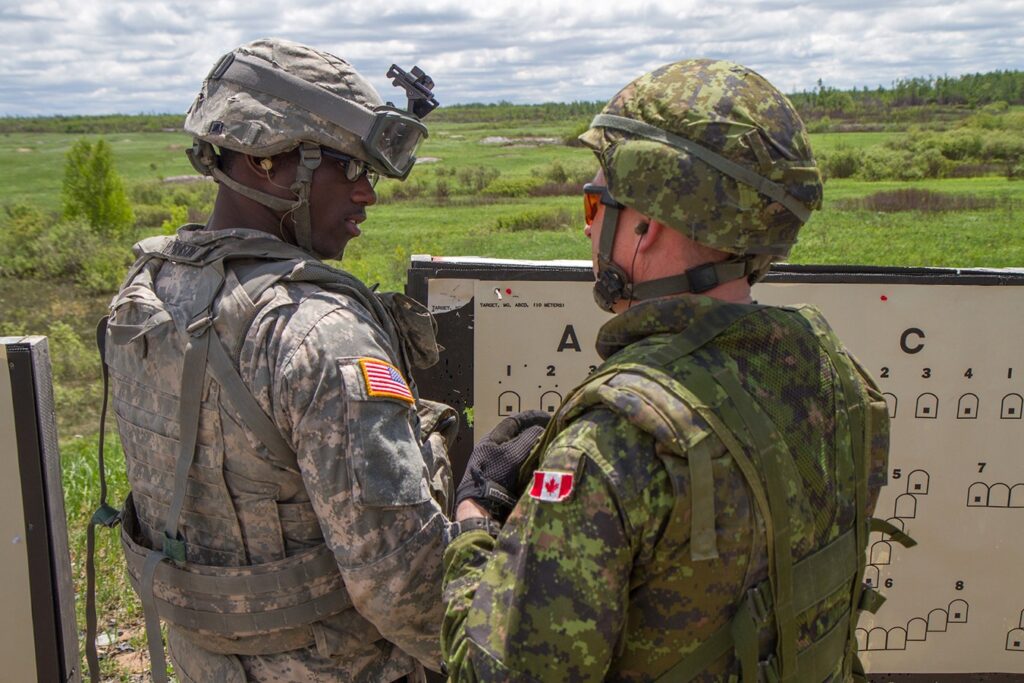
This action is critical. I, for one, believe that if Canada hadn’t been such a lukewarm partner to the US over the past thirty years or so, we might not have been such a ready target for Mr. Trump. Or maybe I’m naïve.
It doesn’t matter. What matters moving forward is that we have to treat our relationship with the United States differently and seriously when it comes to a number of security issues. These include:
- Defence Spending: As mentioned, we have to hit our 2% target continually. This is not just a sticking point for the Trump team. Democrats and Republicans have been harping on this issue for over a decade. Americans are rightly sick and tired of Canada’s freeloading. This commitment needs to be bipartisan and must be generational.
- The Arctic: We have to get serious about this part of the country. Clearly, if we don’t use a la Denmark, we risk losing it. Canada must invest significantly in infrastructure and capabilities that allow us to project presence and power across the region. Among other things that should be brought online: 1) An all-year forward operating base that can accommodate both naval vessels and fighter jets; 2) A submarine capacity that can function under the Arctic ice. This could be an Air Independent Propulsion system, or it could be an agreement with the Royal Navy, which would see the British patrol parts of Canada’s territorial waters with their nuclear-powered subs; 3) Further to my point about allying with the Nordics, Canada should develop and then sharpen a strategic advantage in advance and mobile winter warfare. In particular, a unit like the Canadian Airborne Regiment should be re-constituted and it should be given a mandate to become masterful at operating in extreme cold climates.
- Willingness to be US Partner: I don’t want Canada to become the United States’ bitch, where we do what we’re told when we’re told, but I do think we need to be thoughtful about when we say no to the Americans when they ask for help. Think most recently of Haiti. In 2023, the Biden administration pushed Canada to take on a leadership role to help confront the ongoing disaster that is Haiti. We declined for several reasons, the primary being our military was/is in terrible shape. But in the future, as our military is rehabilitated, Canada must give serious consideration to getting our hands dirty when our American friends ask us to help out. In the eyes of Americans, nothing could give us more credibility and political capital than being helpful to our closest allies, assuming it aligns with Canada’s national interest. In the early 2000s, Afghanistan lined up with our national interest. In 2023, Haiti lined up with our national interest, but we were unable to help. It’s my belief that if we had helped with the Haiti challenge, many more American politicians would have been prepared to stand up for Canada in Congress.
5) Recommit to Canada:
This is an absolute must. With the arrival of a new federal government, Canada MUST undertake a ruthless effort to purge wokeness from the following systems: politics, the civil service, and academia.
Canada cannot remain an independent, vibrant nation that excels into the future if we’re a self-loathing, ever-apologizing, soft mess of a country.
Which isn’t to say Canada should ignore its past. We should continue to acknowledge Canada’s faults while at the same time celebrating the amazing political entity that Canada was and could be again.
Briefly, here are all of the things a new federal government should look to be doing once they come to power to turn the corner of DEI and the larger rubric that is wokeness:
A New Robust Vision of Canada. We need to be proud of Canada again. While still acknowledging our imperfect history, Canada needs to undertake a national multi-year campaign to celebrate Canada’s national achievements and also to identify where Canada is going. The new federal government has to project a new vision of Canada, and it has to communicate this vision to Canadians. Over the next ten years, Canada must undertake a journey to re-build its military, it must resume its mantle as a reliable ally who is a meaningful middle power, Canada must and will develop its resources to become a natural resource superpower, and finally, Canada must once again become a dynamic economy where Canadian AND international businesses want to invest capital and grow companies.
A Commitment to Meritocracy. In its leadership position, the federal government must make it known to all Canadians that all processes to which the federal government is involved will embrace and affect the principle of merit. More than any other principle, merit is what has made Western civilization great. Canada, because of DEI, has expressly and increasingly turned its back on the principle of merit over the past nine years. Merit must be brought back. Full stop.
Commitment to Equality (not Equity). Canadians rightly pride themselves on every Canadian getting a fair shot. We need to double down on this principle while pushing back and even excising entirely the notion that everyone should have equal outcomes. Yes, in some circumstances, some populations in Canada may need extra help to ensure they can maximize their chances of getting a foot in the door. However, the idea that certain populations should receive extraordinary assistance or outright favouritism at every stage of life, at the expense of other populations, is a recipe for socio-economic disaster. Regarding the federal public service, my plea is to return to social engineering programs as they were around 2010 or so. These were balanced, thoughtful and most importantly, they were working.
Removal of DEI-Related Funding for Research Grants. The federal government doesn’t control universities in Canada. Provinces do. The feds’ only leverage is their research-granting programs, but these programs are not insignificant. Through the power of the purse and in one fell swoop, the federal government can deliver a powerful blow to DEI and woke-ism in Canada’s post-secondary system by purging its national research program of this ideological scourge.
Last Word
As a Canadian patriot and nationalist, I think Donald Trump has done us a favour. He has slapped us across the face and reminded us that the world isn’t a safe or nice place. It is run by hard, greedy and self-serving interests.
Canada and its political parties would do well to accept this figurative slap, go to the political gym, and undertake a national retooling that will prepare Canada to drop the gloves more effectively the next time our American friends want to push us around.
Better, they look across the border and see a fit, serious middleweight whom they don’t want to tangle with. Better yet, they see a reliable friend who is strong and capable, and they nod their head and move along to someone more deserving of their ire.
Canada was once this kind of country. We can be again.

Ryan Flannagan is the author of Take Whiteman, A CANZUK at War novel. Visit Ryan’s website: www.raflannagan.ca to learn more about Ryan and his writing.
Be First to Comment